For commercial beekeepers, maintaining optimal brood conditions isn’t just about survival—it’s about maximizing efficiency. Research shows polystyrene beehives outperform traditional wooden hives by leveraging superior thermal regulation, directly enhancing brood health and colony output. Here’s how the science translates to tangible benefits for your apiary.
The Role of Temperature in Honeybee Brood Development
Biological Mechanisms of Brood Maturation
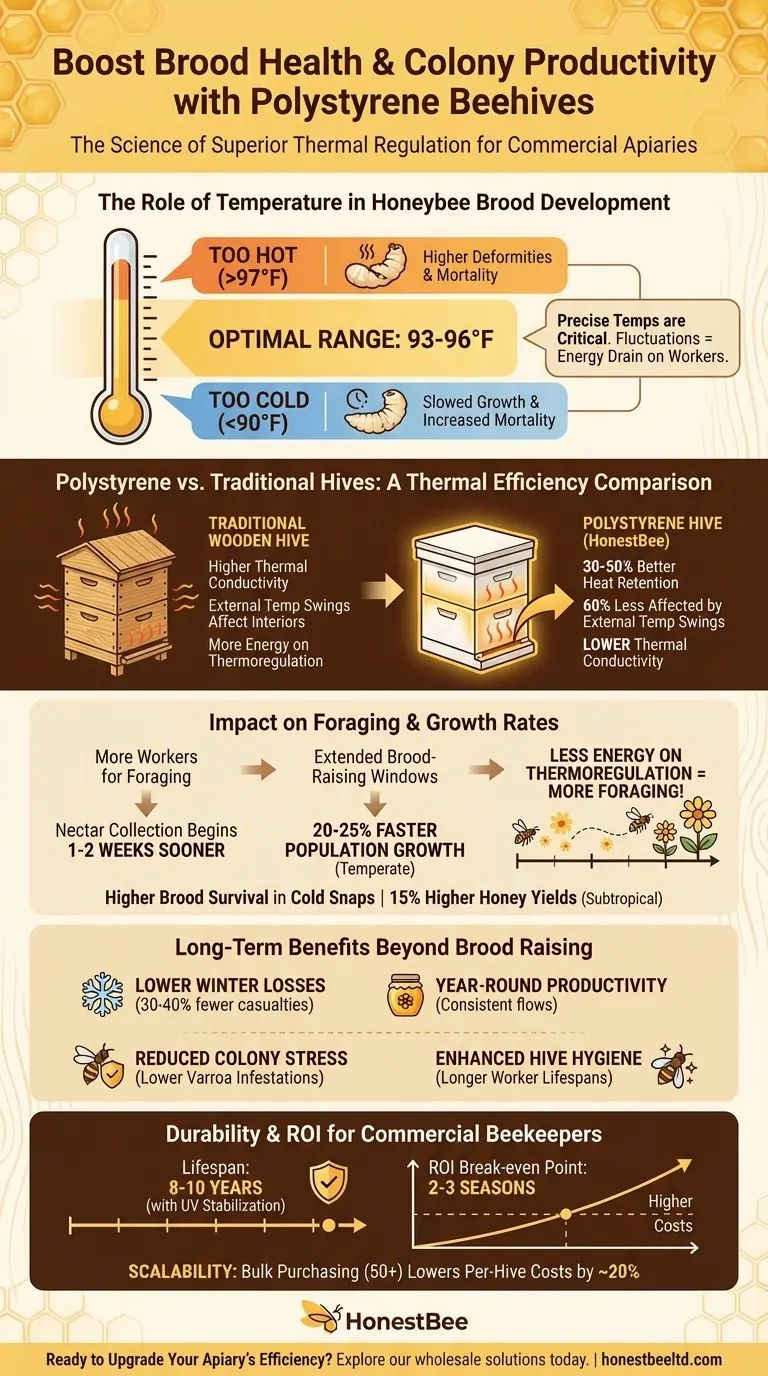
Honeybee larvae require precise temperatures (around 93–96°F) to develop properly. Even minor deviations can delay maturation or increase mortality rates. Worker bees expend significant energy fanning or clustering to maintain this range—energy that could otherwise fuel foraging or hive maintenance.
Critical Temperature Thresholds
Studies indicate:
- Below 90°F: Brood development slows, reducing colony growth rates.
-
Above 97°F: Larvae experience higher deformities and mortality.
Polystyrene’s insulation minimizes these fluctuations, allowing bees to focus on productivity rather than thermoregulation.
Polystyrene vs. Traditional Hives: A Thermal Efficiency Comparison
Heat Retention Metrics
Polystyrene hives retain heat roughly 30–50% more effectively than wooden hives, thanks to:
- Lower thermal conductivity: Polystyrene traps heat, reducing the need for bee-generated warmth.
- Climate resilience: External temperature swings affect hive interiors 60% less in polystyrene models, per field trials.
Impact on Foraging Efficiency
With fewer bees tied to temperature control, colonies allocate more workers to foraging earlier in the season. Case studies show polystyrene-hived colonies:
- Begin nectar collection 1–2 weeks sooner in temperate climates.
- Sustain higher brood survival rates during sudden cold snaps.
Case Studies: Colony Growth Rates in Polystyrene Hives
Temperate vs. Subtropical Performance
- Temperate regions: Polystyrene colonies showed 20–25% faster population growth due to extended brood-raising windows.
- Subtropical zones: Reduced heat stress led to 15% higher honey yields, as bees spent less time ventilating the hive.
Long-Term Colony Stability
By minimizing energy spent on thermoregulation, worker bees exhibit:
- Longer lifespans (reducing replacement needs).
- Enhanced hive hygiene, as more bees can dedicate time to cleaning.
Long-Term Benefits Beyond Brood Raising
Energy Conservation = Higher Output
Stable temperatures mean:
- Lower winter losses: Polystyrene colonies overwinter with 30–40% fewer bee casualties in cold climates.
- Year-round productivity: Commercial apiaries report more consistent honey flows across seasons.
Reduced Colony Stress
Fewer temperature fluctuations correlate with:
- Lower Varroa mite infestations (linked to stress-weakened immunity).
- Reduced swarming impulses, preserving colony cohesion.
Addressing Concerns: Durability and Cost-Effectiveness
Lifespan Under UV Exposure
While polystyrene degrades faster than wood in direct sunlight, modern UV-stabilized models last 8–10 years—comparable to untreated pine. Protective coatings can extend this further.
ROI for Commercial Beekeepers
- Break-even point: Achieved within 2–3 seasons via higher honey yields and reduced colony replacement costs.
- Scalability: Bulk purchasing (e.g., 50+ units) lowers per-hive costs by ~20%, making polystyrene viable for large operations.
Ready to Upgrade Your Apiary’s Efficiency?
HONESTBEE’s polystyrene beehives help commercial beekeepers and distributors achieve healthier colonies and higher yields—without the energy drain of traditional hives. Explore our wholesale solutions today and invest in productivity that pays back season after season.
Guia Visual
Produtos relacionados
- Colmeias profissionais de plástico com isolamento térmico
- Conector de colmeia de plástico durável para apicultura
- Copos para células de enxertia de abelhas rainhas em poliestireno liso preto transparente Sem rebordo para copo de abelhas rainhas
- Moldura de plástico para apicultura Molduras de colmeia para apicultura por atacado
- Caixa de isopor para mini núcleos de acasalamento com quadros Alimentador Colmeias de isopor com 3 quadros
Artigos relacionados
- Colmeias de plástico: Um investimento inteligente para os apicultores modernos
- Como Otimizar o Isolamento de Colmeias: Um Guia Baseado em Dados para Apicultores
- O Guia do Engenheiro para o Inverno de Colmeias: Por Que a Umidade, Não o Frio, é o Inimigo
- Como Isolar Colmeias para Sobrevivência no Inverno: Um Guia Regional para Apicultores
- Como cronometrar o isolamento da colmeia para uma sobrevivência máxima das abelhas no inverno