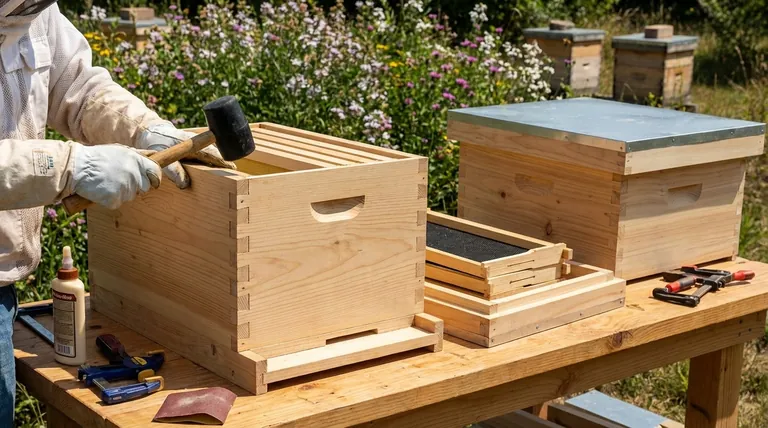
Starting your beekeeping journey with a properly assembled hive is crucial for colony health and your long-term success. This guide breaks down wooden hive assembly into manageable steps, focusing on joint selection, foolproof construction techniques, and real-world durability insights—all tailored for beginners.
Choosing the Right Joint System
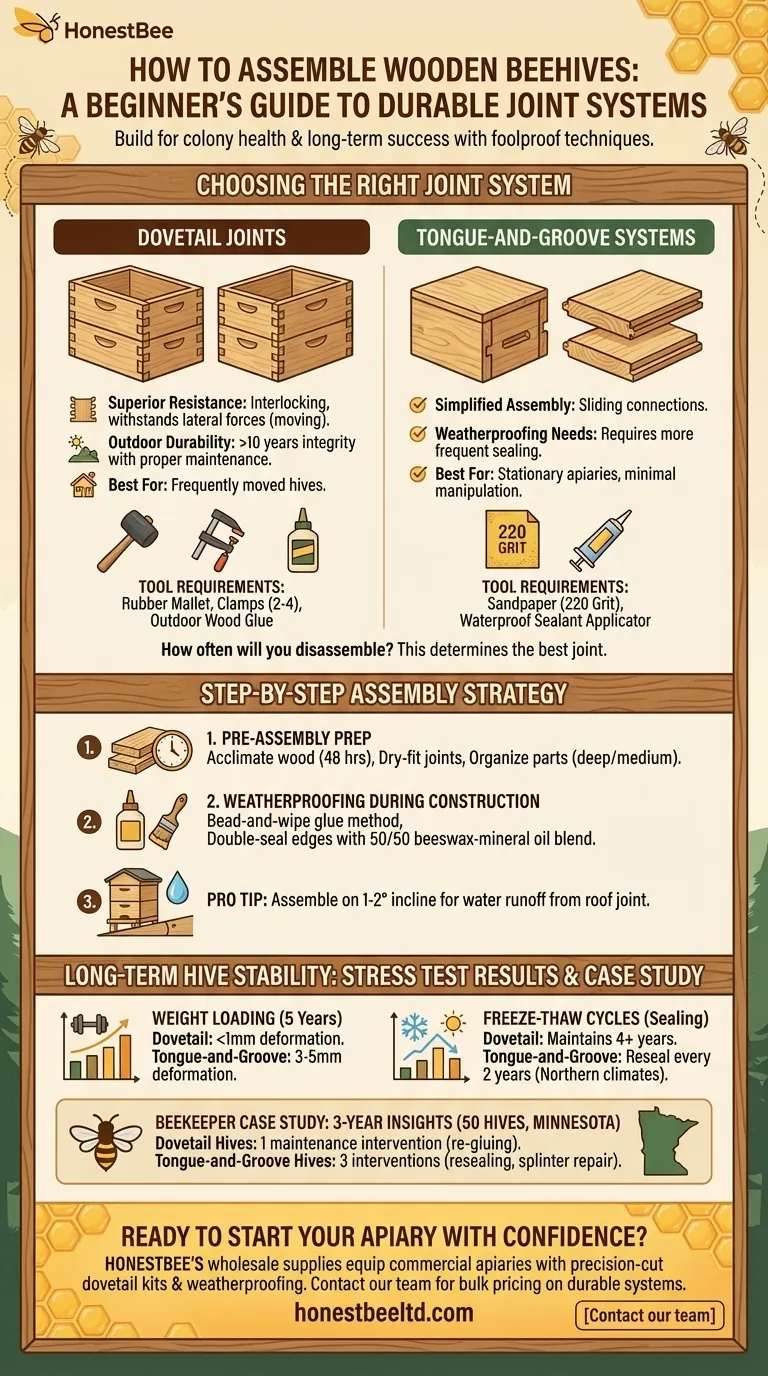
The longevity of your hive depends heavily on selecting joints that withstand weather fluctuations and colony activity. Research shows two joint types dominate modern beekeeping:
Dovetail vs. Tongue-and-Groove: Outdoor Durability Compared
- Dovetail joints interlock like puzzle pieces, offering superior resistance to lateral forces (common when moving hives). Apiary studies indicate these joints maintain integrity for over a decade with proper maintenance.
- Tongue-and-groove systems simplify assembly with sliding connections but require more frequent weatherproofing. They’re ideal for stationary apiaries with minimal hive manipulation.
Tool Requirements Simplified
- Dovetail assembly needs:
- Rubber mallet (to avoid wood splitting)
- Clamps (2-4 per hive)
- Wood glue rated for outdoor use
- Tongue-and-groove requires:
- Sandpaper (220 grit) to smooth friction points
- Waterproof sealant applicator
Have you considered how often you’ll need to disassemble your hive for inspections? This often determines the best joint type for your operation.
Step-by-Step Assembly Strategy
Pre-Assembly Preparation Checklist
- Acclimate wood components for 48 hours in your apiary’s humidity conditions to minimize post-assembly warping.
- Dry-fit all joints before applying adhesives—this reveals tight spots needing sanding.
- Organize parts by box type (deep/medium) to streamline modular construction.
Weatherproofing During Construction
Apply these techniques as you build:
- Bead-and-wipe method: Run a thin glue bead along joint interiors before assembly, wiping excess immediately for cleaner finishes.
- Double-seal edges: After full assembly, brush a 50/50 beeswax-mineral oil blend onto end grains—the most vulnerable moisture entry points.
Pro Tip: Assemble hives on a slightly inclined surface (1-2° slope) to encourage water runoff from the roof joint.
Long-Term Hive Stability
Stress Test Results: How Joints Perform Over Time
Independent apiary tests compared joint durability under three conditions:
- Weight loading (simulating honey-filled supers): Dovetails showed less than 1mm deformation after 5 years vs. 3-5mm in tongue-and-groove systems.
- Freeze-thaw cycles: Tongue-and-groove joints required resealing every 2 years in northern climates, while dovetails maintained seals for 4+ years.
Beekeeper Case Study: 3-Year Durability Insights
A Minnesota apiary tracking 50 hives reported:
- Dovetail hives needed only one maintenance intervention (re-gluing loose joints after extreme winter storms).
- Tongue-and-groove hives averaged three interventions (primarily resealing and splinter repair).
These technologies quietly shape modern beekeeping by reducing maintenance time—a critical factor for commercial operations.
Ready to Start Your Apiary with Confidence?
HONESTBEE’s wholesale beekeeping supplies equip distributors and commercial apiaries with industry-tested hive components. From precision-cut dovetail kits to weatherproofing solutions, we help you build hives that stand the test of time—and keep your colonies thriving. [Contact our team] today for bulk pricing on durable beekeeping systems.
Guia Visual
Produtos relacionados
- Colmeias de madeira de tamanho Dadant para apicultura
- Armações de madeira para colmeias para apicultura e comércio grossista
- Molduras de madeira para abelhas montadas com base de plástico para maior durabilidade e comodidade por HONESTBEE
- Quadros de madeira para abelhas HONESTBEE com fios e montados Fundação para uma colmeia próspera
- Quadros de madeira para abelhas montados com base de cera de abelha prontos a usar por HONESTBEE
Artigos relacionados
- O Assassino Silencioso na Colmeia: Por Que a Umidade, Não o Frio, É a Maior Ameaça do Inverno
- Para Além da Caixa de Abelhas: Por Que o Investimento Inicial no Seu Apiário Determina o Seu Sucesso
- Por que as colmeias de madeira superam as alternativas modernas: um guia baseado na ciência para apicultores
- Como o Espaço das Abelhas Dita o Sucesso da Colmeia: Estratégias de Gestão Baseadas na Ciência
- Mais do que um Número: Por que o Debate Colmeia de 8 Quadros vs. 10 Quadros é Sobre Psicologia, Não Apenas Produção