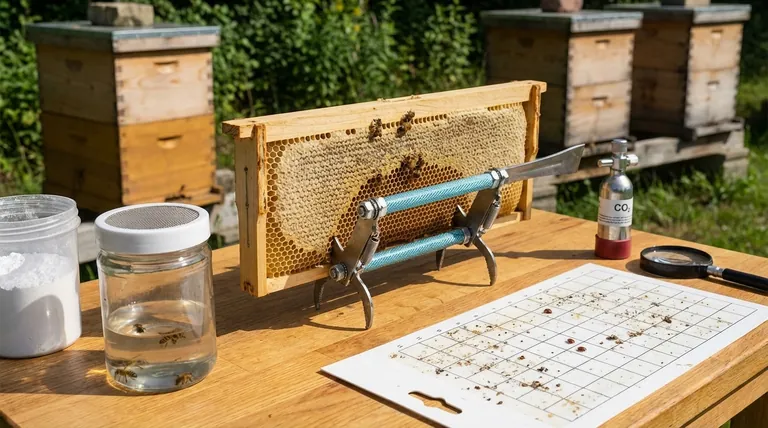
Varroa mites threaten honeybee colonies worldwide, but effective monitoring can prevent devastating losses. The challenge? Balancing accuracy, bee welfare, and seasonal constraints. This guide helps you select the best method for your beekeeping scenario—whether you manage urban hives or a commercial apiary.
Understanding Varroa Mite Monitoring Metrics
Accuracy vs. Bee Stress: Trade-offs Across Methods
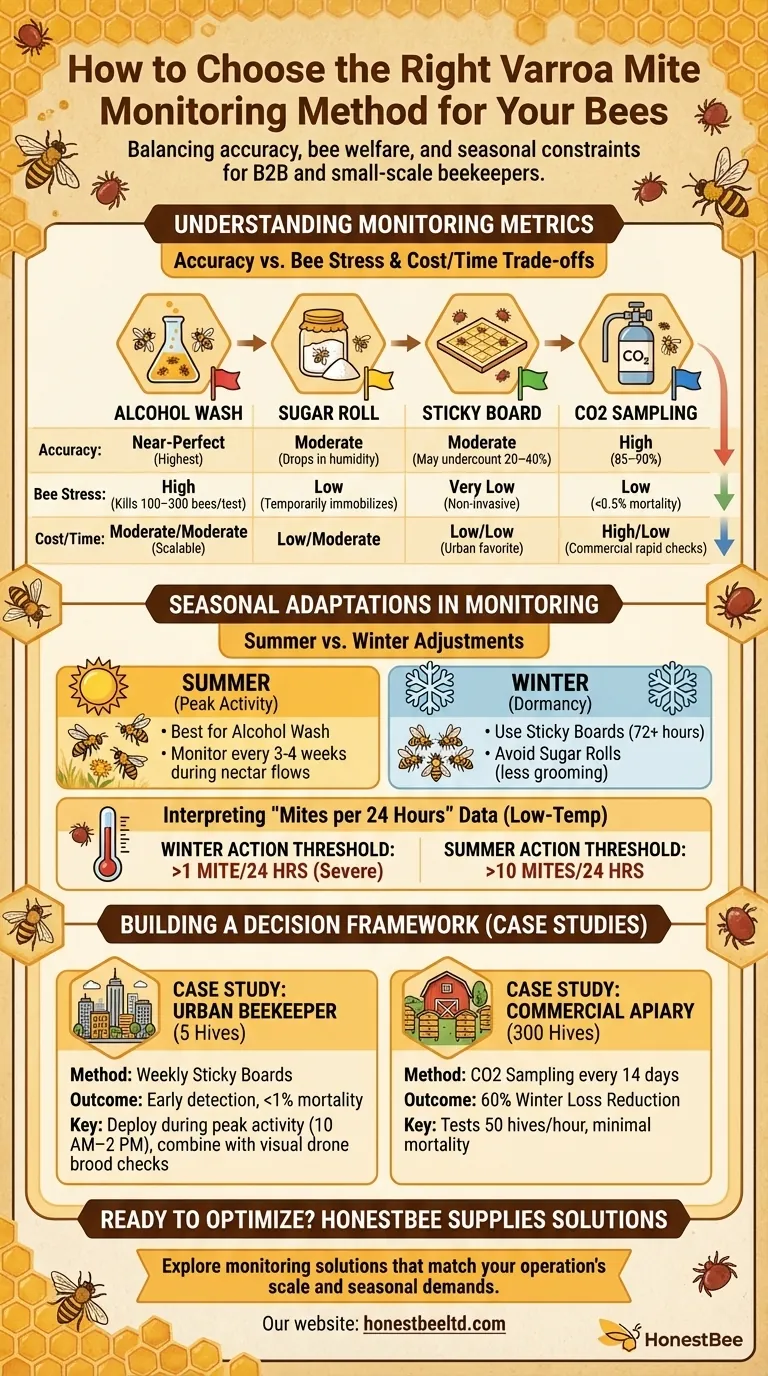
Not all monitoring methods are equal. Research shows the alcohol wash delivers near-perfect accuracy by dislodging mites from collected bees. However, it kills approximately 100–300 bees per test—a concern for small-scale beekeepers prioritizing colony health.
Alternative low-impact methods include:
- Sticky boards: Non-invasive but may undercount mites by 20–40%
- Sugar rolls: Temporarily immobilizes bees without killing them, though accuracy drops in humid conditions
- CO2 sampling: Used by commercial operations for rapid, repeatable checks
Cost and Time Requirements for Small-Scale vs. Commercial Beekeepers
Urban beekeepers often favor sticky boards (low cost, minimal labor) despite moderate accuracy. Commercial apiaries lean toward CO2 sampling or alcohol washes—methods requiring more investment but scalable across hundreds of hives.
Seasonal Adaptations in Mite Monitoring
Summer vs. Winter: Method Adjustments for Hive Behavior
Bees cluster tightly in cold weather, making traditional sampling difficult. During winter dormancy:
- Use sticky boards with longer deployment (72+ hours)
- Avoid sugar rolls; bees groom less in low temperatures
In peak summer:
- Alcohol washes work best when foraging activity is high
- Monitor every 3–4 weeks during nectar flows
Interpreting "Mites per 24 Hours" Data in Low-Temperature Conditions
Cold slows mite reproduction and bee grooming. A count of 2 mites/day in winter may indicate severe infestation, whereas the same count in summer could be negligible. Adjust thresholds seasonally:
- Winter action threshold: >1 mite/24 hours
- Summer action threshold: >10 mites/24 hours
Building a Decision Framework
Case Study: Urban Beekeeper Reducing Hive Losses with Sticky Boards
A hobbyist with 5 hives in Chicago used weekly sticky boards for 2 years, catching infestations early while keeping bee mortality under 1%. Key takeaways:
- Deploy boards during peak bee activity (10 AM–2 PM)
- Combine with visual drone brood inspections
Case Study: Commercial Apiary Using CO2 for High-Frequency Sampling
A 300-hive operation in California adopted CO2 sampling every 14 days, cutting winter losses by 60%. Advantages:
- Tests 50 hives/hour with 85–90% accuracy
- Minimal bee mortality (<0.5% per test)
Ready to Optimize Your Mite Monitoring?
Whether you’re a backyard enthusiast or a large-scale producer, HONESTBEE supplies beekeeping equipment tailored to your needs—from sticky boards to commercial-grade CO2 kits. Protect your colonies with tools designed for accuracy and bee welfare.
Take action today: Visit HONESTBEE to explore monitoring solutions that match your operation’s scale and seasonal demands.
Guia Visual
Produtos relacionados
- Varroa Easy Check Mite Tester Kit Frasco de lavagem com álcool
- Placa de fundo de peneira Langstroth para apicultura Atacado
- Vaporizador de ácido oxálico 12V durável para tratamento de ácaros Varroa Ferramenta de apicultura de colmeia
- Vaporizador de ácido oxálico 12V para tratamento do ácaro Varroa das abelhas
- Dispensador circular compacto de tratamento contra ácaros
Artigos relacionados
- Como os apicultores podem controlar os ácaros Varroa no final do verão sem comprometer a qualidade do mel
- A Calma Enganosa: Por Que Uma Colmeia Forte no Verão Mascara um Colapso Iminente no Inverno
- A Tirania dos Pequenos Números: Dominando a Matemática do Ácaro Varroa Antes que Ele Domine Suas Colmeias
- O Paradoxo Varroa: Por Que Colmeias Fortes de Verão Colapsam no Inverno
- O Sinal e o Ruído: Por Que Colmeias Prósperas Colapsam e Como os Dados Previnem Isso





