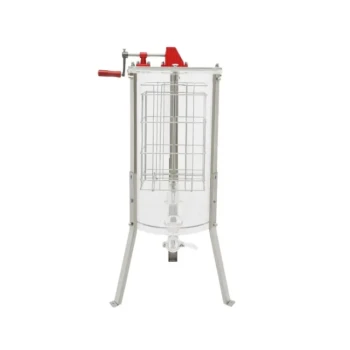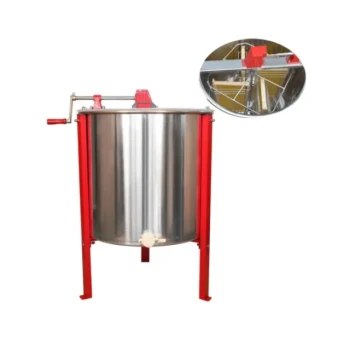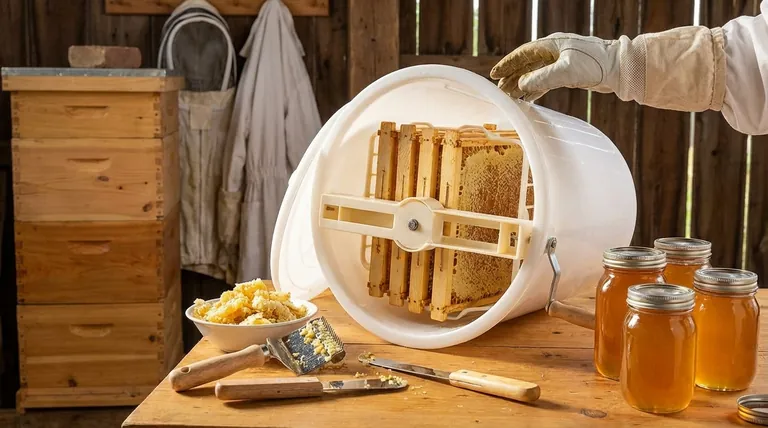
Beekeepers face a delicate balancing act during honey extraction—maximizing yield while protecting fragile combs and maintaining hive health. This guide reveals professional techniques for damage-free harvesting, optimized equipment use, and sustainable hive management.
Mastering Honey Extractor Fundamentals
Honey extraction success begins with understanding how equipment choices impact comb integrity and operational efficiency.
Why Frame Balance Impacts Extraction Success
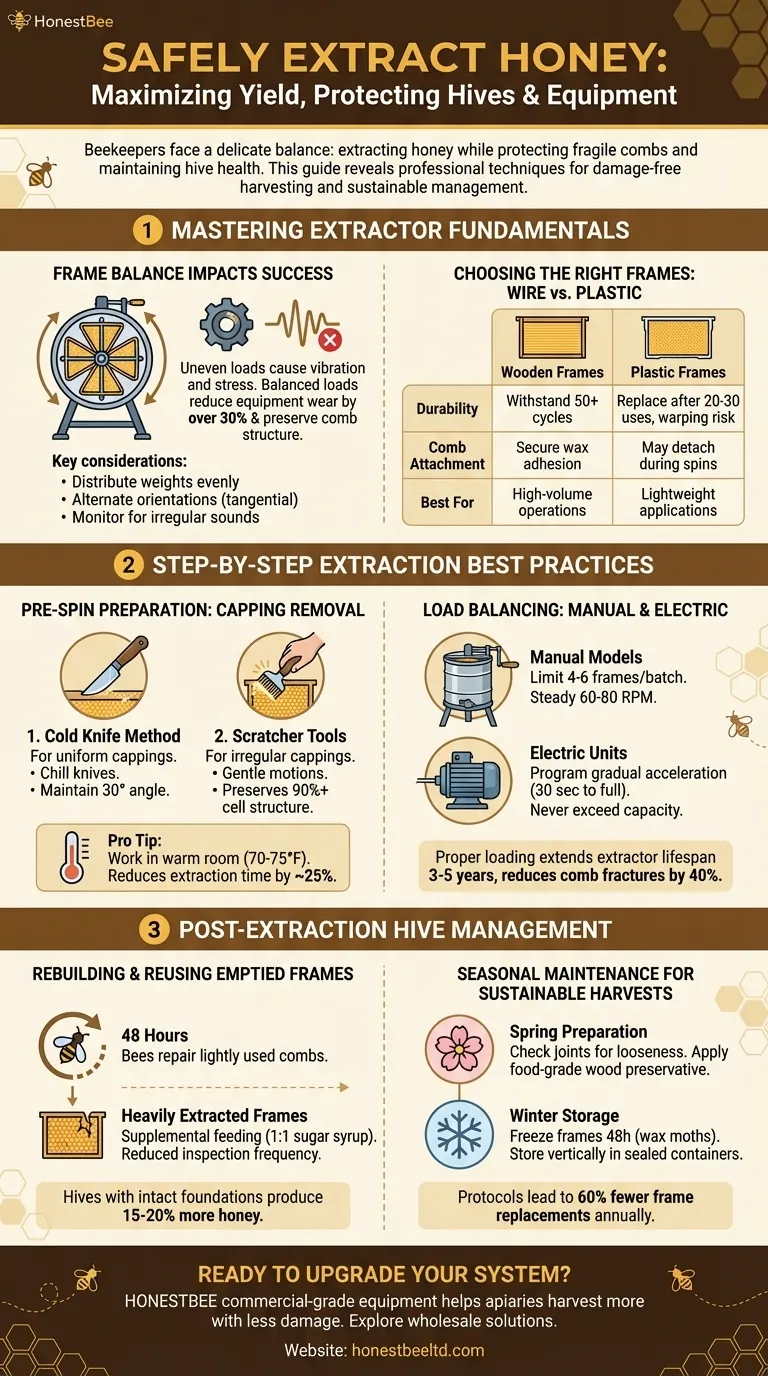
Unevenly loaded extractors cause excessive vibration, stressing frames and potentially cracking delicate wax cells. Research shows balanced loads reduce equipment wear by over 30% while preserving comb structure for reuse.
Key considerations:
- Distribute frame weights evenly across opposing sides
- Alternate frame orientations in tangential models
- Monitor motor sounds for irregular vibrations
Choosing the Right Frames: Wire vs. Plastic Foundations
| Feature | Wooden Frames | Plastic Frames |
|---|---|---|
| Durability | Withstand repeated spins | Prone to warping over time |
| Comb Attachment | Secure wax adhesion | May detach during spins |
| Best For | High-volume operations | Lightweight applications |
Industry data indicates wooden frames maintain structural integrity through 50+ extraction cycles, while plastic variants often require replacement after 20-30 uses.
Step-by-Step Extraction Best Practices
Pre-Spin Preparation: Capping Removal Techniques
Proper uncapping prevents extractor clogging and preserves honey quality:
-
Cold knife method (ideal for uniform cappings)
- Chill knives between uses to prevent wax melting
- Maintain 30° blade angle for clean cuts
-
Scratcher tools (for irregular cappings)
- Use gentle back-and-forth motions
- Preserves 90%+ of cell structure
Pro Tip: Work in a warm room (70-75°F) to keep honey viscous—this reduces extraction time by nearly 25%.
Load Balancing Methods for Manual & Electric Extractors
Manual models:
- Limit to 4-6 frames per batch
- Maintain steady 60-80 RPM rhythm
Electric units:
- Program gradual acceleration (30 sec to full speed)
- Never exceed manufacturer's frame capacity
Field tests show proper loading techniques can extend extractor lifespan by 3-5 years while reducing comb fractures by 40%.
Post-Extraction Hive Management
How Bees Rebuild and Reuse Emptied Frames
Bees typically repair lightly used combs within 48 hours, but heavily extracted frames may require:
- Supplemental feeding (1:1 sugar syrup)
- Reduced inspection frequency (limit to weekly checks)
Studies indicate hives with intact comb foundations produce 15-20% more honey in subsequent flows.
Seasonal Maintenance for Sustainable Harvests
Spring preparation:
- Check frame joints for looseness
- Apply food-grade wood preservative
Winter storage:
- Freeze frames for 48 hours to eliminate wax moths
- Store vertically in sealed containers
Beekeepers who implement these protocols report 60% fewer frame replacements annually.
Ready to upgrade your extraction system? HONESTBEE's commercial-grade equipment helps apiaries and distributors harvest more honey with less comb damage. Explore our wholesale solutions for beekeepers who value both productivity and hive welfare.
Have you evaluated how your current extraction methods impact long-term hive productivity? The subtle vibrations from unbalanced loads or aggressive spinning create cumulative stress that affects future honey yields. Professional operations now prioritize gentle extraction not just for immediate results, but for sustaining colonies across multiple seasons—a philosophy that's reshaping modern apiculture.
Guia Visual
Produtos relacionados
- Extrator manual de mel com 3 quadros em aço inoxidável para extração de mel de abelha
- Extrator de mel elétrico Centrífuga de mel Extrator de mel de 3 quadros Extrator de quadros de mel em aço inoxidável
- Extrator de mel manual acrílico com 3 quadros HONESTBEE
- Máquina manual de extração de mel radial de 8 quadros em aço inoxidável para colmeias
- HONESTBEE Extrator de mel manual acrílico de 2 quadros Equipamento de apicultura
Artigos relacionados
- Como otimizar os extractores manuais de mel para uma colheita em pequena escala sem esforço
- A Física da Paciência: Dominando a Velocidade do Extrator de Mel para Salvar Seus Quadros
- Como escolher o extrator de mel perfeito para as suas necessidades apícolas
- Como Escolher o Tamanho Certo do Extrator de Mel: Equilibrando Capacidade, Custo e Eficiência
- Como Limpar o Seu Extrator de Mel com Segurança Sem Comprometer a Qualidade do Mel