Beekeepers face a critical challenge: providing optimal nutrition without compromising bee health. This guide reveals the biochemical foundations of safe bee feeding and delivers actionable best practices to strengthen your colonies—backed by apicultural research and field-tested methods.
The Critical Role of Sugar Purity in Bee Nutrition
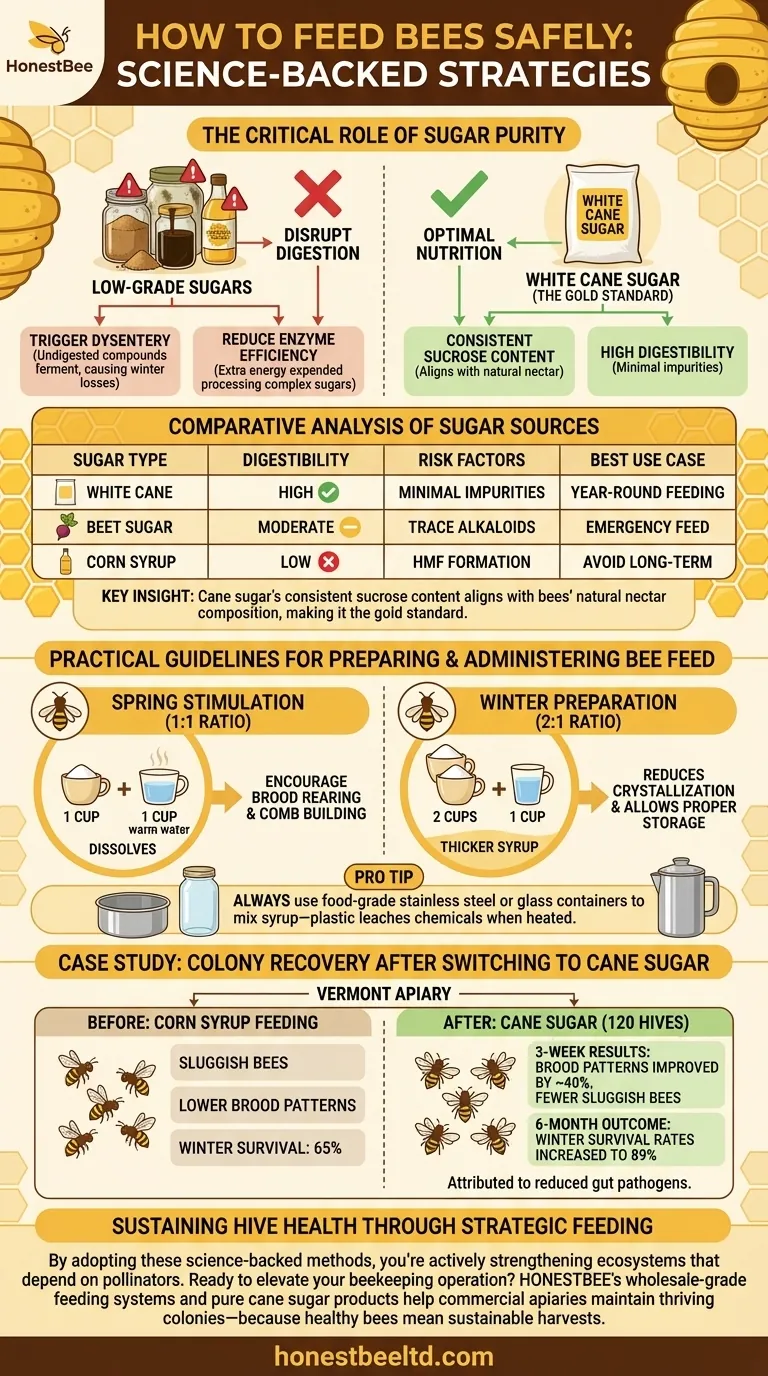
Bees rely on carbohydrates for energy, but not all sugar sources are equal. Impurities in low-grade sugars (e.g., molasses residues in brown sugar or high-fructose corn syrup) can disrupt bee digestion. Research shows these contaminants:
- Trigger dysentery: Undigested compounds ferment in the gut, causing winter colony losses.
- Reduce enzyme efficiency: Bees expend extra energy processing complex sugars like raffinose.
Comparative Analysis of Sugar Sources
| Sugar Type | Digestibility | Risk Factors | Best Use Case |
|---|---|---|---|
| White cane | High | Minimal impurities | Year-round feeding |
| Beet sugar | Moderate | Trace alkaloids | Emergency feed |
| Corn syrup | Low | HMF formation over time | Avoid for long-term use |
Key Insight: Cane sugar’s consistent sucrose content aligns with bees’ natural nectar composition, making it the gold standard for supplemental feeding.
Practical Guidelines for Preparing and Administering Bee Feed
Step-by-Step Sugar Syrup Ratios
-
Spring Stimulation (1:1 ratio):
- Mix 1 part cane sugar with 1 part warm water to dissolve completely.
- Use during nectar scarcity to encourage brood rearing and comb building.
-
Winter Preparation (2:1 ratio):
- Thicker syrup (2 parts sugar to 1 part water) reduces crystallization in feeders.
- Feed in early fall to allow proper storage in honeycomb cells.
Pro Tip: Always use food-grade stainless steel or glass containers to mix syrup—plastic leaches chemicals when heated.
Case Study: Colony Recovery After Switching to Cane Sugar
A Vermont apiary replaced corn syrup with cane sugar in 120 hives during a spring dearth:
- 3-week results: Brood patterns improved by ~40%, with fewer bees exhibiting sluggish behavior.
- 6-month outcome: Winter survival rates increased from 65% to 89%, attributed to reduced gut pathogens.
Sustaining Hive Health Through Strategic Feeding
Bees aren’t just insects; they’re precision-engineered pollinators whose health hinges on dietary quality. By adopting these science-backed methods, you’re not only avoiding preventable losses but actively strengthening ecosystems that depend on pollinators.
Ready to elevate your beekeeping operation? HONESTBEE’s wholesale-grade feeding systems and pure cane sugar products help commercial apiaries maintain thriving colonies—because healthy bees mean sustainable harvests.
Guia Visual