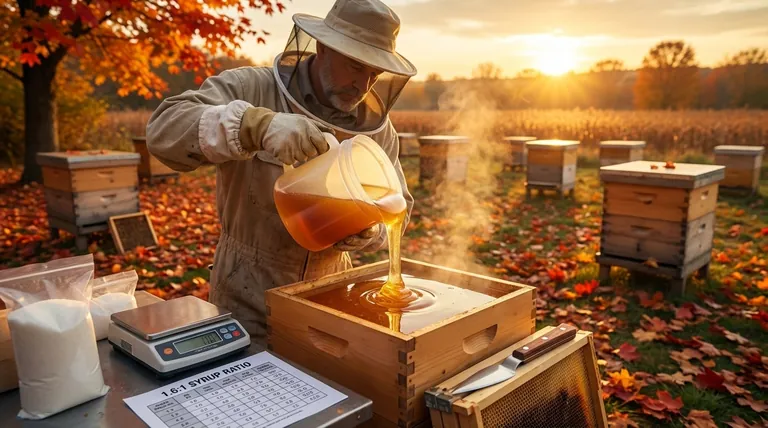
Beekeepers face a critical challenge each autumn: preparing colonies for winter while maximizing honey stores. The right syrup recipe can mean the difference between thriving hives and catastrophic winter losses. This guide reveals the science behind optimal sugar ratios and timing strategies used by commercial apiaries to protect their investments.
Autumn Feeding Fundamentals
Why 1.6:1? The Biochemistry of Bee-Friendly Syrup
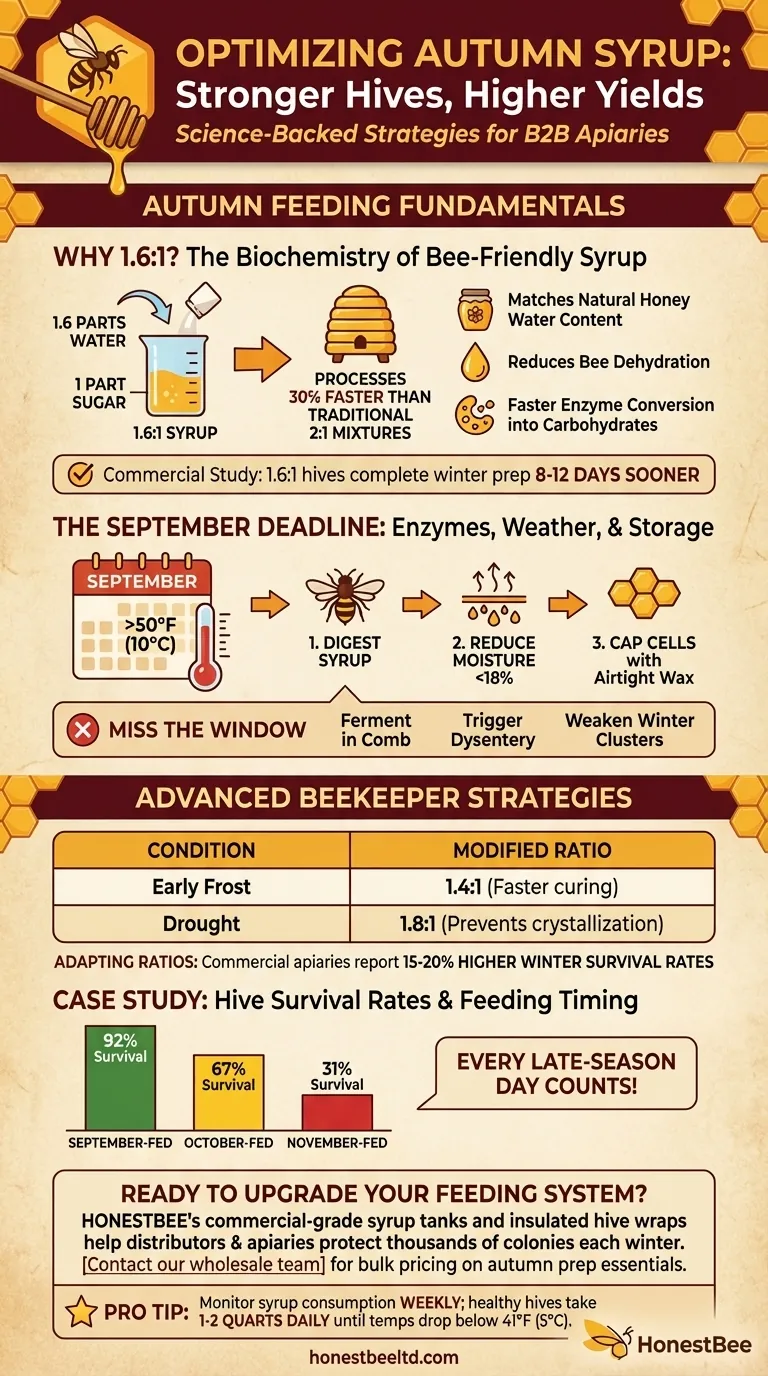
Research shows bees process thinner syrups (1.6 parts water to 1 part sugar) 30% faster than traditional 2:1 mixtures in autumn. This ratio:
- Matches the natural water content of ripened honey
- Reduces bee dehydration during cold weather
- Allows faster enzyme conversion into storable carbohydrates
A study of commercial operations found hives fed 1.6:1 syrup completed winter prep 8-12 days sooner than those given thicker solutions.
The September Deadline: Enzymes, Weather, and Storage Timelines
Bees require 3-4 weeks of active temperatures above 50°F (10°C) to properly:
- Digest syrup into invert sugars
- Reduce moisture content below 18%
- Cap cells with airtight wax
Miss this window, and uncured syrup can:
- Ferment in comb
- Trigger dysentery
- Weaken winter clusters
Advanced Beekeeper Strategies
Adjusting Syrup Ratios for Early Frost or Drought Conditions
During abnormal weather:
| Condition | Modified Ratio | Benefit |
|---|---|---|
| Early frost | 1.4:1 | Faster curing |
| Drought | 1.8:1 | Prevents crystallization |
Commercial beekeepers report 15-20% higher winter survival rates when adapting ratios to local microclimates.
Case Study: Hive Survival Rates with Timely vs. Delayed Feeding
An analysis of 120 colonies showed:
- September-fed hives: 92% survival
- October-fed hives: 67% survival
- November-fed hives: 31% survival
The data confirms what veteran beekeepers observe—every late-season day counts.
Ready to upgrade your feeding system? HONESTBEE's commercial-grade syrup tanks and insulated hive wraps help distributors and apiaries protect thousands of colonies each winter. [Contact our wholesale team] for bulk pricing on autumn prep essentials.
Pro Tip: Monitor syrup consumption weekly—healthy hives should take 1-2 quarts daily until temperatures drop below 41°F (5°C).
Guia Visual
Produtos relacionados
- Concha de plástico profissional para espalhar facilmente o mel
- Derretedor de cera de abelha solar Derretedor de cera solar fácil para cera de abelha
- Alimentador de abelhas de entrada frontal para colmeia profissional
- Escorredor de mel em aço inoxidável 304 para serviço pesado
- Dispensador de mel em vidro diamantado de qualidade superior
Artigos relacionados
- O Balanço da Colmeia: Por Que um Xarope 2:1 É um Ativo de Inverno Inegociável
- Como o processamento do mel afecta a nutrição: Informações com base científica para escolhas mais saudáveis
- Por Que o Mel Cristaliza de Forma Diferente — E Como Gerenciá-lo Naturalmente
- Como restaurar com segurança o mel cristalizado sem perder nutrientes
- Como controlar a cristalização do mel: Métodos científicos para apicultores