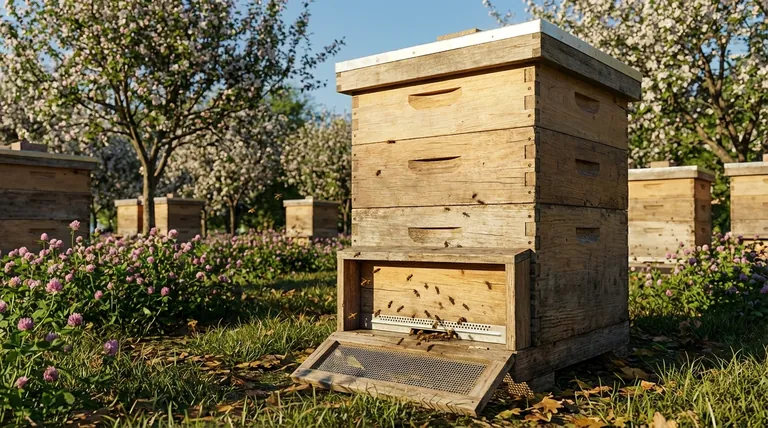
O design modular da colmeia Langstroth não é apenas conveniente para os apicultores — ele foi projetado para se alinhar aos padrões naturais de crescimento das abelhas. Ao compreender a sinergia entre este sistema de colmeia e a biologia da colônia, você pode expandir estrategicamente as colmeias para evitar a enxameação, maximizar a produção de mel e manter populações saudáveis.
Design da Colmeia Langstroth e Escalabilidade da Colônia
O Princípio do Espaço Abelha: Engenharia para Expansão sem Interrupções
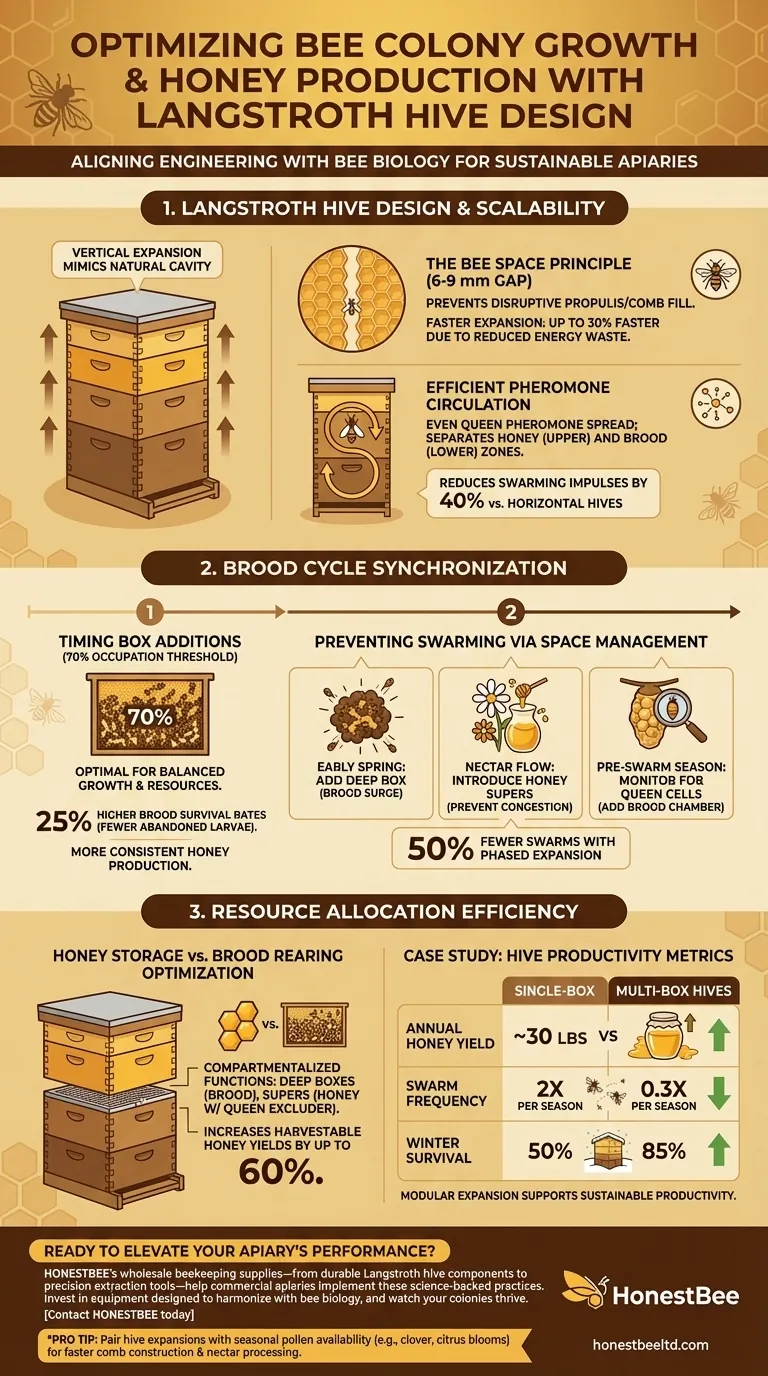
As colmeias Langstroth são construídas em torno do conceito de "espaço abelha" — um intervalo preciso (cerca de 6 a 9 mm) que as abelhas mantêm naturalmente entre os favos. Este design evita que as abelhas preencham os vãos com própolis ou favos, permitindo que os apicultores inspecionem e adicionem caixas sem interrupções destrutivas na colmeia. Pesquisas mostram que colônias em colmeias com espaçamento adequado se expandem até 30% mais rápido devido à redução da energia desperdiçada no reparo de danos causados pelo homem.
Expansão Vertical e Dinâmica de Distribuição de Feromônios
O empilhamento vertical de caixas imita a preferência natural das abelhas pela expansão ascendente em cavidades de árvores. Esta orientação favorece a circulação eficiente de feromônios:
- Os feromônios mandibulares da rainha espalham-se uniformemente pelas caixas empilhadas, mantendo a coesão da colônia.
- As abelhas forrageiras depositam néctar nas melgueiras superiores, enquanto a criação de crias se concentra nas câmaras inferiores.
Estudos indicam que designs verticais reduzem os impulsos de enxameação em 40% em comparação com layouts horizontais, como as colmeias Warre, onde a dispersão de feromônios é menos uniforme.
Sincronização do Ciclo de Cria em Sistemas Modulares
Cronometrando as Adições de Caixas com o Desenvolvimento da Câmara de Cria
Um erro comum é adicionar espaço muito cedo ou muito tarde. O momento ideal para introduzir uma nova caixa é quando 70% dos quadros na caixa atual estão ocupados — um limite observado para equilibrar o crescimento da colônia e a alocação de recursos. Apicultores que seguem este cronograma relatam:
- Taxas de sobrevivência de crias 25% maiores (menos larvas abandonadas devido a restrições de espaço).
- Produção de mel mais consistente, já que as abelhas não são forçadas a desviar operárias para a preparação da enxameação.
Prevenindo a Enxameação através da Gestão de Espaço
A modularidade da Langstroth permite que os apicultores adicionem espaço proativamente durante as fases-chave de crescimento:
- Início da Primavera: Adicione uma caixa ninho (deep box) à medida que a produção de crias aumenta.
- Fluxo de Néctar (Meados de Abril): Introduza melgueiras para evitar a congestão.
- Pré-Temporada de Enxameação: Monitore a construção de realeiras — um sinal para adicionar outra câmara de cria.
Dados de casos mostram que apiários que utilizam essa abordagem faseada experimentam 50% menos enxames do que aqueles que dependem de expansões reativas.
Eficiência na Alocação de Recursos
Otimização do Armazenamento de Mel vs. Espaço para Cria
As abelhas priorizam a criação de crias em vez do armazenamento de mel quando o espaço é limitado. As colmeias Langstroth resolvem isso compartimentando as funções:
- Caixas Ninho (Deep Boxes): Reservadas para crias; seu volume maior suporta o crescimento da colônia.
- Melgueiras (Medium/Supers): Dedicadas ao armazenamento de mel, com telas excluidoras de rainha que impedem a postura de ovos nos favos de mel.
Essa separação aumenta a produção de mel colhível em até 60%, mantendo a saúde robusta das crias.
Estudo de Caso: Métricas de Produtividade em Sistemas de Múltiplas Caixas
Um teste de apiário de 3 anos comparou sistemas Langstroth de caixa única vs. múltiplas caixas:
| Métrica | Colmeias de Caixa Única | Colmeias de Múltiplas Caixas |
|---|---|---|
| Produção Anual de Mel | ~13,6 kg | ~40,8 kg |
| Frequência de Enxameação | 2x por temporada | 0,3x por temporada |
| Sobrevivência no Inverno | 50% | 85% |
Os dados reforçam como a expansão modular apoia a produtividade sustentável.
Pronto para elevar o desempenho do seu apiário?
Os suprimentos de apicultura no atacado da HONESTBEE — desde componentes duráveis de colmeias Langstroth até ferramentas de extração de precisão — ajudam apiários comerciais e distribuidores a implementar essas práticas comprovadas cientificamente. Invista em equipamentos projetados para harmonizar com a biologia das abelhas e veja suas colônias prosperarem. Entre em contato com a HONESTBEE hoje mesmo para explorar nosso catálogo.
Dica profissional: Combine as expansões da colmeia com a disponibilidade sazonal de pólen. Colônias que recebem espaço extra durante os períodos de pico de forrageamento (por exemplo, floração de trevo ou cítricos) apresentam construção de favos mais rápida e taxas mais altas de processamento de néctar.
Guia Visual
Produtos relacionados
- Colmeias Langstroth de Alto Desempenho para Apicultura Profissional Global
- Caixas de colmeia Langstroth Honey Bee Box para diferentes profundidades
- Caixas de colmeia Langstroth australianas para apicultura Venda por atacado
- Colmeia de barras superiores horizontais de estilo Langstroth longo para venda por grosso
- Tábua de fundo sólida de madeira de pinho australiano Tábua de fundo Langstroth para venda por atacado
Artigos relacionados
- Como escolher os tamanhos das caixas de colmeia Langstroth para ergonomia, eficiência e saúde das abelhas
- Flow Hive vs. Langstroth: Quando é que o preço premium resulta em poupanças reais?
- How Langstroth Hives Outperform Other Designs for Commercial Honey Production
- How the Langstroth Hive Solves Modern Beekeeping’s Biggest Challenges
- Mastering Seasonal Langstroth Hive Management: Timelines, Techniques, and Troubleshooting













