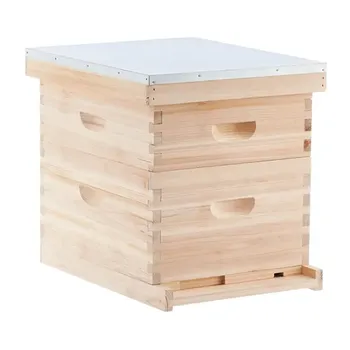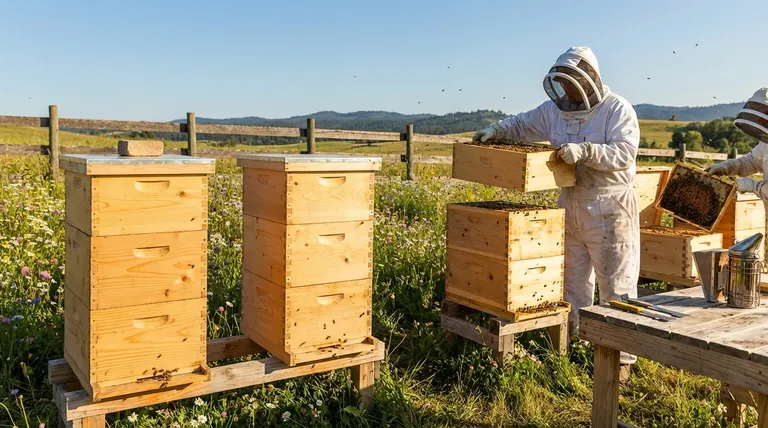
Beekeepers face a critical decision when configuring Langstroth hives: selecting the right box sizes to balance human ergonomics, operational costs, and colony welfare. This guide examines deep, medium, and shallow box trade-offs through real-world case studies, helping you optimize hive setups for your specific needs.
Understanding Langstroth Hive Box Standards
Deep Boxes: Brood Chamber Dynamics and Limitations
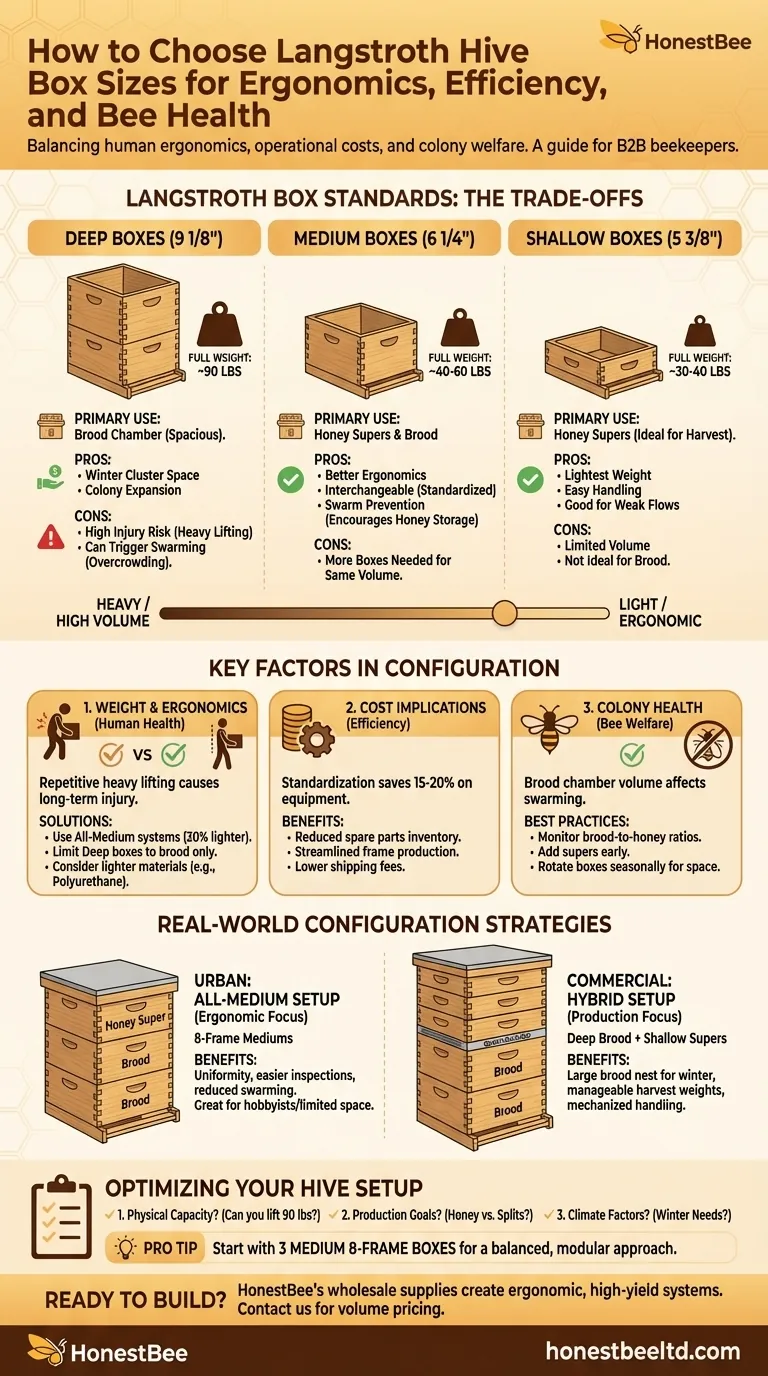
Deep boxes (9 1/8" frame height) are traditional for brood chambers due to their spacious interior, which supports colony expansion. However, research shows that oversized brood nests can inadvertently trigger swarming—a natural colony-splitting behavior triggered by overcrowding.
Key considerations for deep boxes:
- Pros: Ideal for strong colonies in cold climates needing winter cluster space
- Cons: Heavy when full (up to ~90 lbs), increasing injury risk during inspections
- Bee health note: Overly large brood chambers may delay honey storage, forcing bees to congest the nest
Medium/Shallow Boxes: Honey Storage Efficiency
Medium (6 1/4") and shallow (5 3/8") boxes excel as honey supers. Their lighter weight (40–60 lbs when full) reduces physical strain, and standardized frame sizes allow interchangeability—a boon for urban beekeepers with space constraints.
Why beekeepers choose smaller boxes:
- Ergonomics: 8-frame medium boxes weigh ~30% less than 10-frame deeps
- Economic flexibility: Identical box dimensions simplify equipment replacement
- Swarm prevention: Encourages bees to prioritize honey storage over excessive brood rearing
Key Factors in Box Configuration
Weight Management and Beekeeper Ergonomics
The American Beekeeping Federation notes that repetitive heavy lifting contributes to long-term injuries among beekeepers.
Practical solutions:
- Use all-medium 8-frame systems for unified box dimensions
- Limit deep boxes to brood chambers only, reducing lift frequency
- Consider polyurethane boxes (20% lighter than wood) for commercial operations
Cost Implications of Standardization vs. Specialization
A University of Beekeeping Economics study found that apiaries using uniform medium boxes saved 15–20% on equipment costs over 5 years through:
- Reduced spare parts inventory
- Streamlined frame production
- Lower shipping fees for standardized components
Colony Health and Swarm Prevention
Brood chamber volume directly impacts swarming impulses. A Cornell University apiary trial demonstrated:
| Box Type | Swarm Rate (Colonies/Year) | Honey Yield (Lbs/Colony) |
|---|---|---|
| 2 Deep Boxes | 35% | 60–80 |
| 3 Medium Boxes | 18% | 50–70 |
Best practices:
- Monitor brood-to-honey ratios during nectar flows
- Add supers before bees backfill the brood nest
- Rotate boxes seasonally to maintain optimal bee space
Real-World Hive Configuration Strategies
Case Study: Urban Beekeeper Using All-Medium Boxes
Portland hobbyist Maria K. switched to 8-frame medium boxes exclusively after struggling with deep box weight:
"I can now inspect all 12 hives alone. The uniform boxes let me rotate frames freely—when one colony needs more space, I borrow from another. Swarm rates dropped by half since the bees don’t feel cramped."
Her setup:
- Brood chamber: 2 medium boxes
- Honey supers: 1–3 medium boxes (added progressively)
- Winter prep: Consolidate to 3 boxes with insulated wraps
Case Study: Commercial Operation with Deep Brood + Shallow Supers
Texas-based HonestBee supplier Lone Star Apiaries uses a hybrid model for 500+ hives:
"Deep brood boxes give our Italian bees room to build winter clusters. Shallow supers keep harvest weights manageable—our team can process 300+ supers daily during peak flow."
Their efficiency tweaks:
- Brood boxes: 2 deep 10-frame (replaced every 3 years)
- Honey supers: Shallow 10-frame (palletized for mechanized handling)
- Queen excluders: Only used during sourwood honey flows
Optimizing Your Hive Setup
Three questions to guide your decision:
- Physical capacity: Can you safely lift 80+ lbs repeatedly? If not, smaller boxes are wiser.
- Production goals: Are you maximizing honey yield or colony splits? Deep brood chambers support rapid expansion.
- Climate factors: Do winters require larger bee clusters? Northern apiaries often need deep box insulation.
Pro Tip: Start with 3 medium 8-frame boxes for a balanced approach—you’ll gain modularity without sacrificing brood space.
Ready to Build Your Ideal Hive?
HonestBee’s wholesale beekeeping supplies help commercial apiaries and distributors create ergonomic, high-yield hive systems. Explore our durable Langstroth components designed for interchangeable use—because your back and your bees deserve thoughtful equipment. [Contact HonestBee today] for volume pricing on standardized hive kits.
About the Data: Findings are synthesized from university apiary trials, beekeeping federation guidelines, and interviews with commercial operators. Weight estimates assume pine boxes with 50–75% drawn comb.
Guia Visual
Produtos relacionados
- Colmeias Langstroth de Alto Desempenho para Apicultura Profissional Global
- Caixas de colmeia Langstroth australianas para apicultura Venda por atacado
- Caixas de colmeia Langstroth Honey Bee Box para diferentes profundidades
- Caixas de plástico ondulado para núcleos de 5 quadros Langstroth Poly Nuc
- Quadro de fundo sólido Langstroth para apicultura
Artigos relacionados
- Flow Hive vs. Langstroth: Quando é que o preço premium resulta em poupanças reais?
- Como o design da colmeia Langstroth otimiza o crescimento da colônia de abelhas e a produção de mel
- How the Langstroth Hive Solves Modern Beekeeping’s Biggest Challenges
- Como escolher entre colmeias Top Bar e Langstroth para uma apicultura sem esforço
- How Langstroth Hives Outperform Other Designs for Commercial Honey Production