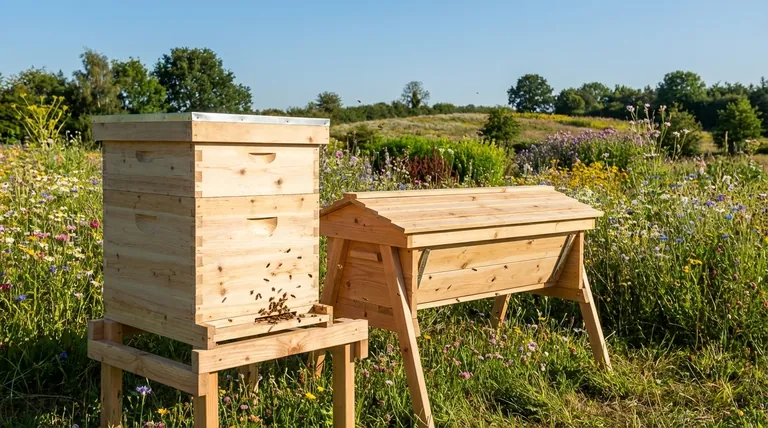
Beekeepers face a critical decision when selecting hive designs: Should you prioritize honey production efficiency, natural bee behaviors, or operational simplicity? This guide compares Langstroth and Top Bar hives across productivity, sustainability, and practicality—helping you align your choice with your beekeeping objectives.
Langstroth vs. Top Bar Hives: A Strategic Comparison
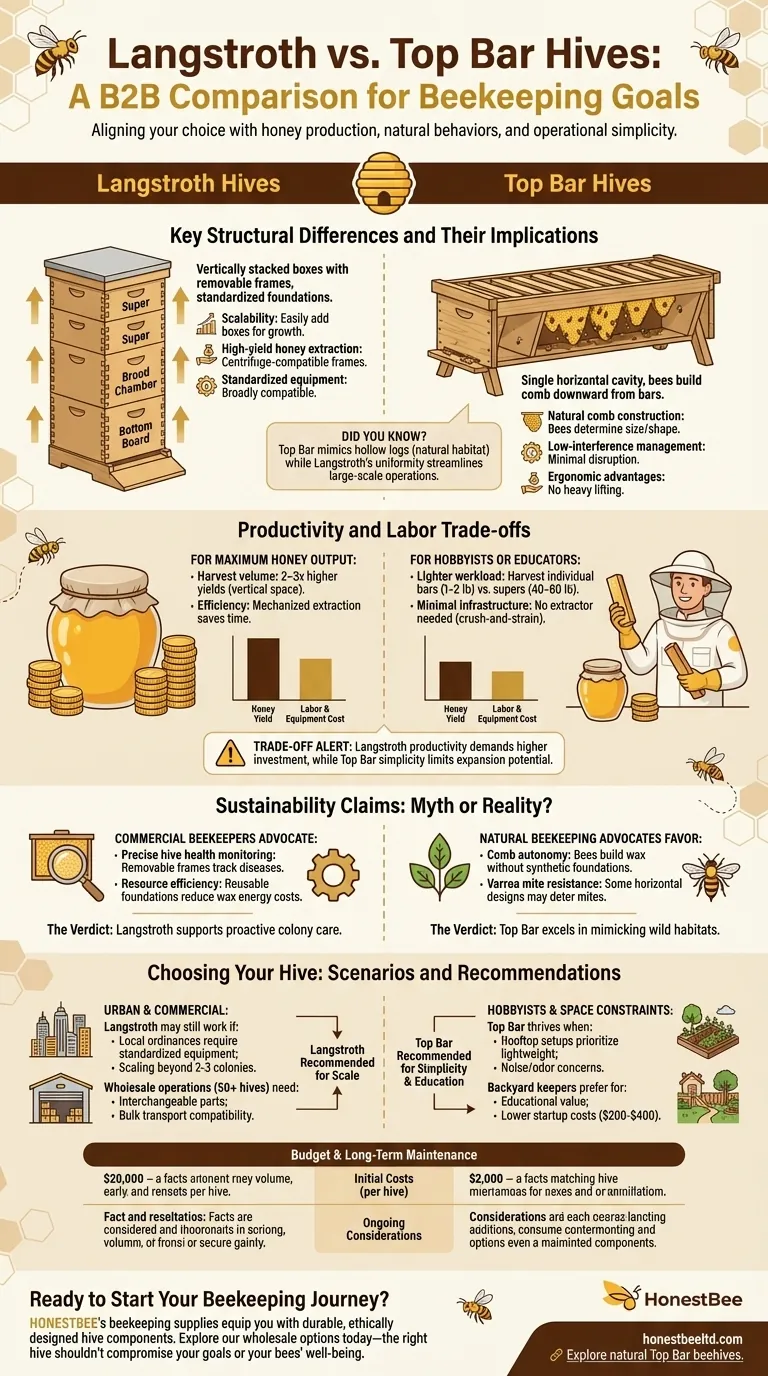
Key Structural Differences and Their Implications
Langstroth Hives use vertically stacked boxes with removable frames, allowing bees to build comb within standardized foundations. This modular design enables:
- Scalability: Easily add boxes (supers) as the colony grows
- High-yield honey extraction: Frames can be spun in centrifuges without comb destruction
- Standardized equipment: Widely compatible with commercial beekeeping tools
Top Bar Hives feature a single horizontal cavity where bees build comb downward from wooden bars. This promotes:
- Natural comb construction: Bees determine cell size and shape
- Low-interference management: Inspections require minimal disruption
- Ergonomic advantages: No heavy lifting (bars weigh less than full supers)
Did you know? Top Bar hives mimic hollow logs—a habitat bees naturally prefer—while Langstroth’s uniformity streamlines large-scale operations.
Productivity and Labor Trade-offs
For maximum honey output, Langstroth hives outperform:
- Harvest volume: Vertical stacking allows more comb space (research suggests 2–3× higher yields in commercial settings)
- Efficiency: Mechanized extraction processes save time for large apiaries
For hobbyists or educators, Top Bar hives reduce physical strain:
- Lighter workload: Harvesting involves removing individual 1–2 lb bars vs. 40–60 lb Langstroth supers
- Minimal infrastructure: No extractor needed; crush-and-strain methods suffice
Trade-off alert: Langstroth’s productivity demands more equipment investment, while Top Bar’s simplicity limits expansion potential.
Sustainability Claims: Myth or Reality?
Natural beekeeping advocates favor Top Bar hives because:
- Comb autonomy: Bees build wax without synthetic foundations (reduces chemical exposure)
- Varroa mite resistance: Some studies suggest horizontal designs may deter mites by disrupting their movement patterns
Commercial beekeepers counter that Langstroth systems enable:
- Precise hive health monitoring: Removable frames help track diseases
- Resource efficiency: Reusable foundations reduce wax production energy costs
The verdict: Both designs can be sustainable—Top Bar excels in mimicking wild habitats, while Langstroth supports proactive colony care.
Choosing Your Hive: Scenarios and Recommendations
Urban Beekeeping and Space Constraints
Top Bar hives thrive here when:
- Rooftop/balcony setups prioritize lightweight handling
- Noise/odor concerns favor slower, smaller honey harvests
Langstroth may still work if:
- Local ordinances require standardized equipment
- You plan to scale beyond 2–3 colonies
Commercial Honey Production vs. Backyard Hobbyists
Wholesale operations (50+ hives) typically need Langstroth for:
- Interchangeable parts that streamline maintenance
- Bulk transport compatibility with palletized equipment
Backyard keepers often prefer Top Bar for:
- Educational value: Observing natural comb-building fascinates new beekeepers
- Lower startup costs: Saves hundreds on extractors and heavy-duty gear
Budget and Long-Term Maintenance
Initial costs (per hive):
- Top Bar: $200–$400 (wooden bars only)
- Langstroth: $300–$600 (includes supers, frames, and foundations)
Ongoing considerations:
- Langstroth requires replacing plastic foundations every 5–7 years
- Top Bar combs are fragile; damaged bars need frequent rebuilding
Ready to Start Your Beekeeping Journey?
Whether you’re a commercial grower optimizing honey yields or a sustainability-focused hobbyist, HONESTBEE’s beekeeping supplies equip you with durable, ethically designed hive components. Explore our wholesale options today—because the right hive shouldn’t compromise your goals or your bees’ well-being.
Final thought: Your ideal hive doesn’t just hold bees; it reflects your philosophy as a steward of pollinators. Which design speaks to your vision?
Products You Might Be Looking For:
Explore natural Top Bar beehives
Guia Visual
Produtos relacionados
- Colmeias de madeira de tamanho Dadant para apicultura
- Respiradouros redondos em forma de colmeia em aço inoxidável para ventilação
- Suporte metálico para colmeia Suporte para caixa de abelhas para apicultura
- Conjunto de números de colmeia em plástico durável para apicultura
- Armações de madeira para colmeias para apicultura e comércio grossista
Artigos relacionados
- O Assassino Silencioso na Colmeia: Por Que a Umidade, Não o Frio, É a Maior Ameaça do Inverno
- Para Além da Caixa de Abelhas: Por Que o Investimento Inicial no Seu Apiário Determina o Seu Sucesso
- Como montar colmeias de madeira: Um guia para iniciantes sobre sistemas de encaixe duráveis
- Por que as colmeias de madeira superam as alternativas modernas: um guia baseado na ciência para apicultores
- Como o Espaço das Abelhas Dita o Sucesso da Colmeia: Estratégias de Gestão Baseadas na Ciência


















