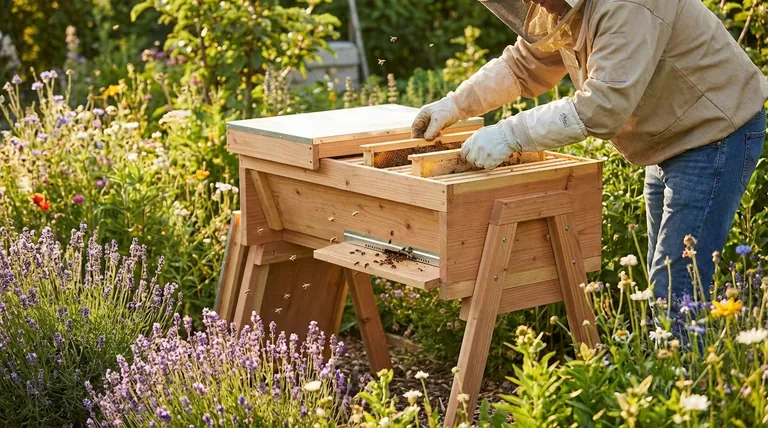
For backyard beekeepers seeking a sustainable, low-maintenance approach, top bar hives offer a health-first design that aligns with bees' natural instincts while reducing physical strain on the keeper. Unlike conventional framed hives, this system prioritizes bee welfare through natural comb construction, efficient temperature regulation, and non-invasive harvesting—delivering a balanced ecosystem in your backyard.
Why Top Bar Hives Promote Healthier Bees
Natural Comb Dynamics and Pest Resistance
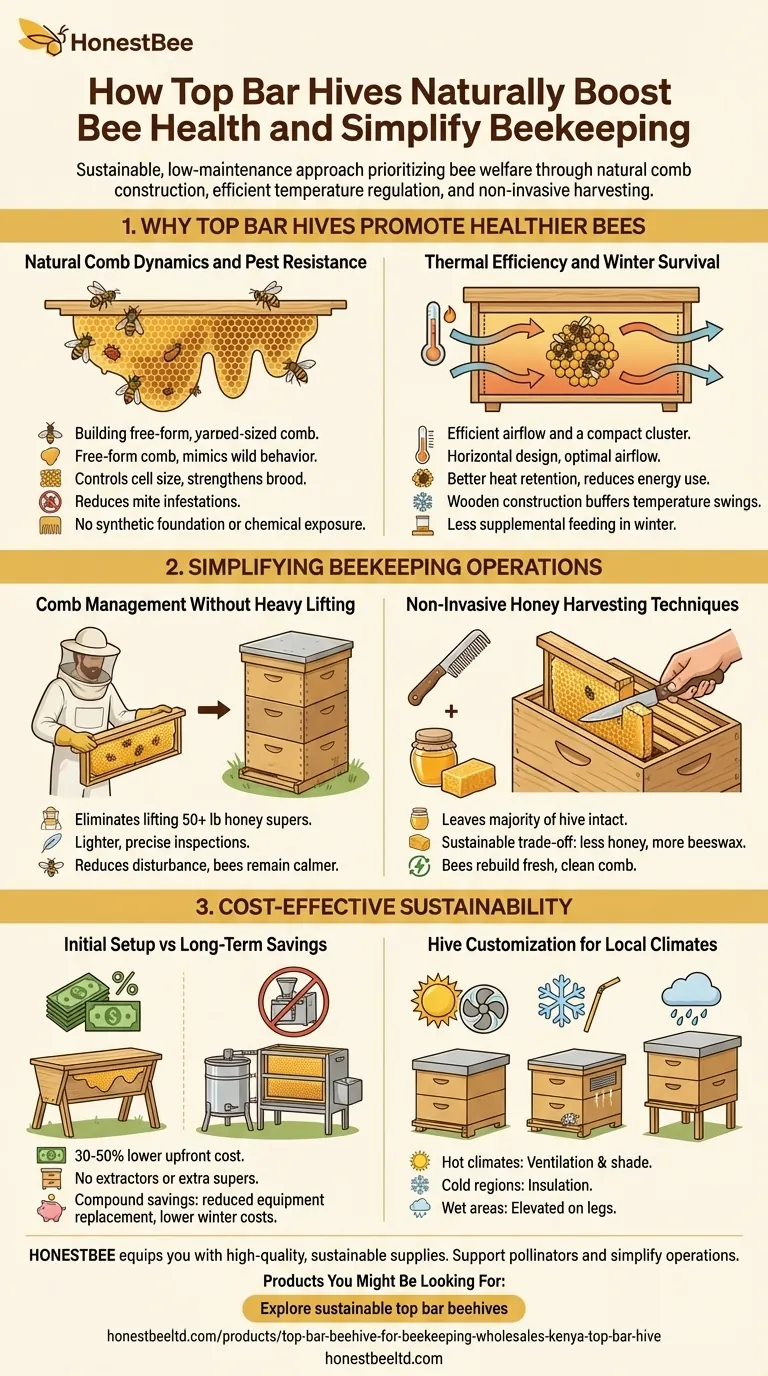
Bees in top bar hives build comb freely, mimicking their wild behavior. This natural process allows them to control cell sizes, which research suggests strengthens brood health and may reduce mite infestations. Unlike pre-framed foundation, which forces uniform cell dimensions, organic comb construction lets bees adapt to seasonal needs—smaller cells for worker brood in spring, larger ones for drones when needed.
The absence of synthetic foundation also eliminates potential chemical exposure (like paraffin coatings in some framed systems). Beeswax purity matters: studies indicate mites struggle to thrive in natural comb environments, as bees can more effectively groom themselves and each other.
Thermal Efficiency and Winter Survival Advantages
Top bar hives’ horizontal design and single-chamber structure create optimal airflow and heat retention. Bees cluster more efficiently in winter, as the compact space reduces energy expenditure. The hive’s wooden construction also buffers temperature swings—a critical factor for colony survival in colder climates.
Observational data from backyard beekeepers shows top bar colonies often require less supplemental feeding in winter compared to vertical hives, where heat rises unevenly through stacked boxes.
Simplifying Beekeeping Operations
Comb Management Without Heavy Lifting
For keepers with physical limitations or those prioritizing ease, top bar hives eliminate the need to lift 50+ pound honey supers. Inspections involve sliding out individual bars—a lighter, more precise process. This design also reduces disturbance to the colony; bees remain calmer when their home isn’t being disassembled layer by layer.
Non-Invasive Honey Harvesting Techniques
Harvesting involves cutting comb from a few bars at a time, leaving the majority of the hive intact. While this yields less honey annually (3–5 gallons vs. 5–10 in Langstroth hives), it’s a trade-off for sustainability: bees rebuild fresh comb, renewing their environment naturally. The method also produces more beeswax—a valuable byproduct for candles or cosmetics.
Pro tip: Harvest in the evening when most bees are inactive, and use a bee-friendly brush to gently clear remaining workers from the comb.
Cost-Effective Sustainability
Initial Setup vs Long-Term Savings
Top bar hives cost roughly 30–50% less than framed systems upfront, with no need for extractors or additional supers. Over time, savings compound through reduced equipment replacement (natural comb lasts longer than wired foundation) and lower winter preparation costs.
Hive Customization for Local Climates
The simple design allows modifications:
- Hot climates: Add ventilation holes or shade covers.
- Cold regions: Insulate the hive body with straw or wood shavings.
- Wet areas: Elevate the hive on legs to prevent moisture buildup.
This adaptability makes top bar hives ideal for regions with extreme weather fluctuations.
Ready to Start Your Bee-Friendly Journey?
HONESTBEE equips beekeepers and distributors with high-quality, sustainable supplies—from hive kits to harvesting tools. Whether you’re a backyard enthusiast or a commercial apiary, our wholesale-focused solutions help you support pollinators while keeping operations simple and scalable.
By choosing a top bar hive, you’re not just keeping bees—you’re stewarding a miniature ecosystem that thrives on simplicity. The bees (and your back) will thank you.
Products You Might Be Looking For:
Explore sustainable top bar beehives
Guia Visual
Produtos relacionados
- Colmeia de barra superior para apicultura Venda por grosso Colmeia de barra superior no Quénia
- Colmeia de barras superiores horizontais de estilo Langstroth longo para venda por grosso
- Máquina Formadora de Rolos de Barra Superior e Inferior de Precisão HONESTBEE para Produção de Quadro de Colmeia
- Alimentador de abelhas HONESTBEE Square Top Hive Alimentador de abelhas Top
- Alimentador de colmeia redondo HONESTBEE para xarope
Artigos relacionados
- Como inspecionar as colmeias de barras superiores sem danificar os favos: Guia do Apicultor
- Para Além do Controlo de Pragas: A Lógica Operacional da Colmeia Top-Bar Queniana
- How to Optimize Honey Storage in Top Bar Hives for Healthier Colonies
- Arquitetura da Colmeia e o Paradoxo do Inverno: Por Que a Retenção de Calor Não é Suficiente
- Como colher mel das colmeias Top Bar de forma sustentável: Um guia amigo das abelhas